Twenty types of models, which one is yours?
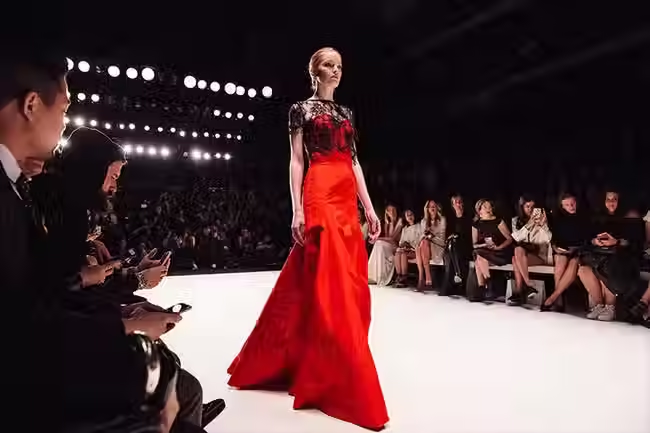
When people think of modeling, they usually think of runway shows or models in glossy fashion magazines. The fashion industry employs the highest number of models. Modeling as an occupation began in 1853.
The credit goes to French designer Charles Frederick Worth, the father of haute couture, who asked his wife, Marie Augustine Vernet, to model for the clothes he designed. Before that, clothes were showcased on mannequins.
With the boom in the fashion industry and the advent of fashion photography, the scope for modeling increased.
Lisa Fonssagrives is said to be the first model to gain popularity in more than 200 editions of Vogue. Vogue became a top player in the fashion industry, creating opportunities for many upcoming models.
However, it was not until the 1960s that modeling found the right gear. Modeling agencies sprung up, and agents became the middlemen.
The modeling world is far more expansive than the glamorous runway shows that often come to mind. While fashion modeling remains a prominent sector, the industry encompasses diverse roles and opportunities. From commercial modeling to niche specialties, there's a place for individuals of all shapes, sizes, and backgrounds.
When "model" is mentioned, many people immediately envision tall, slender figures confidently strutting down catwalks in high-fashion cities. However, this narrow perception fails to capture the true breadth of the modeling profession. This post aims to shed light on the diverse types of models, showcasing the industry's inclusivity and versatility.
What does a model do?
A model is a visual representation, utilizing their physical appearance to promote products or contribute to artistic endeavors.
Their work can involve collaborating with photographers to create fashion images, showcasing new clothing lines on runways, or posing for artists engaged in drawing, painting, or sculpting.
Companies often employ models for advertising and marketing campaigns to enhance brand visibility and appeal.
Modeling has become a part of global popular culture, and the models who walk the runway have gained prominence. There is talk of diverse representation of models in the fashion industry in terms of gender, ethnicity, and age of models.
Modeling is one of those exclusive professions that lends itself to implementing your creative skills in diverse ways.
As a model, you can be ingenious and explore the different areas of the fashion industry.
Some models experiment with one specialized category, while others try out multiple types of modeling to find the genre that best suits them.
If you want to pursue a career in modeling, you need to be sure about the area that best fits you.
Different Types of Models in the fashion world
1. Promotional Modeling
Promotional models, also known as promo models or brand ambassadors, generally work on assignments for consumer-driven brands.
They participate in promotional events, trade shows, digital launches, live shows, and conventions.
They must be extroverted and highly interactive, as a major part of their job is to drive consumer demand for a specific product or service by directly interacting with potential customers.
This is a popular form of brand advertising or marketing. Besides being conventionally attractive, a promotional model should be articulate and smart, clearly understand the client's requirements, and have in-depth knowledge about the product.
The more work, a promotional model, does, the greater his or her chances of finding jobs and being noticed by professionals and industry insiders.
2. Fashion Modeling
Fashion models are synonymous with the glamorous world of high-end fashion. They grace runways, showcasing designer clothing collections.
Additionally, fashion models often engage in editorial work, posing for still shots of designer clothing. These images are typically featured in prestigious fashion magazines like Vanity Fair, Elle, and Vogue.
You might have heard of top fashion models Kendall Jenner, Gigi Hadid, and Karlie Kloss.
To add to this list, some other famous fashion models are Chrissy Teigen, Naomi Campbell, Kate Moss, and Miranda Kerr. These models need to follow a rather strict lifestyle regime.
Diet and fitness are two areas that demand specific attention. Along with that, professionalism and an ambitious outlook are necessary.
The standard height requirement for a female editorial fashion model is 5 feet and 9 inches to 6 feet. For men, the required height is 5 feet and 11 inches to 6 feet and 3 inches.
3. Commercial Model
Commercial modeling includes a variety of categories, including catalog, fit, and editorial modeling.
Commercial models are the attractive, "real-looking" individuals you often see in advertisements, with the exception of editorial photos, which are typically used in fashion magazines.
Commercial modeling opportunities are available for individuals of various ages and body types.
From lifestyle catalogs to medical brochures, commercial modeling jobs are plentiful.
Many successful commercial models are also actors, as their ability to convey multiple layers of emotion for the camera can be a valuable asset in this field.
Their job is to fit into retail clothing or to be able to endorse a product or service successfully.
Accordingly, to the industry's standard sample size, commercial models are hired if they are between 5'6" to 5'11" in the case of females and males are required to be between 5'9" to 6'2".
The type of model requirements and preferences change according to the clients.
4. Editorial Modeling for Commercial Models
Editorial modeling involves creating visual content that complements and enhances articles in magazines. These photos can be featured on the cover or within the magazine itself.
The images should align with the theme or subject matter of the article, conveying the appropriate emotions or atmosphere.
For instance, a model might express excitement in a photo accompanying an article on marriage proposals or appear unwell for a health-related piece.
5. Print Modeling
Print modeling involves posing for various newspapers, magazines, and other print publications.
This includes appearances in advertisements and catalog photos. For example, clothing models may pose in different outfits to showcase their appeal.
Print models often practice various poses and techniques to enhance their presentation skills. This practice may involve working with a photographer to identify the model's most flattering angle and ensure effective presentation to the camera.
6. Arts nude modeling
Arts nude refers to the classical and artistic style that uses nudity and is completely exempt of any sexual message. Models must obviously be over 18 and physical requirements are somehow flexible. Men typically should have an athletic appearance with defined but not excessive muscles. Women typically should be slim but slightly curvy with no noticeable bones and a smooth skin overall plus a natural small breast.
This type of modelling is well respected and recognized in artistic circles. There are few commercial opportunities and most of the creations are by freelance models or collaborations with a photographer or other type of artist.
7. Fitness Modeling
Fitness modeling is a highly competitive industry that takes hard work, determination, and dedication. Most fitness models are health enthusiasts. Fitness models are required to possess athletic bodies and maintain excellent physical condition.
They maintain a healthy lifestyle, eat clean and radiate positive energy. These models can take on various roles owing to their versatility.
They are hired to participate in advertisements for various companies, including gyms, health supplement providers, and workout apparel manufacturers.
8. Glamour Modeling
Glamour models are renowned for their exceptional beauty and captivating allure.
They frequently grace the pages of men's magazines, swimsuit editorials, and adult-oriented content.
The core focus of glamour modeling is to showcase the model's physical attractiveness and evoke a sense of desire or admiration.
Glamour models need to be a minimum of 18 years of age. Their bodies and appearance need to strictly meet agency standards.
The right location can add visual appeal to your glamour photo shoot. So it is important to learn how to choose the right locations that suit your theme, complement your outfit, makeup and blends with your photographer's style.
9. Swimsuit and Lingerie Modeling
Swimsuits and lingerie models are often confused with glamour models, but they are not the same.
As the name suggests, swimsuits and lingerie models model-specific garments like lingerie, swimsuits, summer wear, and nightwear.
Depending on their skill, type, and versatility, these models can walk fashion runway shows, appear in fashion editorials, and even appear in commercial catalogs for various brands, designers, and stores.
These types of models are required to constantly monitor their diet and maintain proper shape and size.
10. Petite Modeling
If you have unique looks, ooze confidence, sport a signature style and have the right attitude, petite modeling can be a perfect fit for you.
A petite model is generally above 5’ 1’’ and not taller than 5’ 7’’. You must know your characteristic strengths and strong features and use them to your advantage.
As a petite model, you would find work in the fashion, commercial, glamour, and part sectors of modeling.
Modeling assignments are available for select catalogs, ads, and magazines. New retailers are also catering to the petite category with dedicated styles.
Lily-Rose Depp, Emily Ratajkowski, Aaron Frew are some of the hugely popular petite models in the fashion industry.
If you have unique looks, ooze confidence, sport a signature style and have the right attitude, petite modeling can be a perfect fit for you. A petite model is generally above 5’ 1’’ and not taller than 5’ 7’’. You must know your characteristic strengths and strong features and use them to your advantage. As a petite model, you would find work in the fashion, commercial, glamour, and part sectors of modeling. Modeling assignments are available for select catalogs, ads, and magazines. New retailers are also catering to the petite category with dedicated styles. Lily-Rose Depp, Emily Ratajkowski, Aaron Frew are some of the hugely popular petite models in the fashion industry.
11. Body Part Modeling
A Parts Model specializes in modeling for specific parts of the body such as hand, leg, feet, facial features. A parts model works on editorial, advertising, and catalog work. This type of modeling is focused on very specific visual requirements.
For instance, for a jewelry brand endorsement, the model is required to have flawless, smooth even-toned skin, with well-trimmed and shaped nails.
As a body model, you might hold a product in your hand or demonstrate a perfect smile in a toothpaste ad. For hand models, long, slender hands are generally preferred.
However, smaller hands may be sought after for advertising children's toys, while rougher-looking hands might be desired for tool or machinery ads.
12. Fit Modeling
Fit models work with fashion designers and manufacturers to make sure that each garment has the ideal sizing, drape, fit and movement.
Since garment and fashion industries cater to a wider audience, their samples are made considering a variety of shapes and sizes in mind.
Their products cannot be shipped without checking the size of their garments.
That is where the role of a fit model comes into play. Fit models need not have the editorial and runway figures printed in magazines but their job requires them to be well-toned and maintain consistent body weight, whether petite or plus-sized.
With ideal size 6 or 8 physiques, fit models play a very important role in how the clothes we buy actually fit.
13. Mature Modeling
It is never too late to start working as a professional mature model. More than experience, it is important that you are comfortable behind the frame, exude grace and a warm personality and have a professional attitude.
A mature model is generally above 35-40 years of age and is healthy and physically fit. Greys, wrinkles or age spots are not a concern for a mature model.
Several high-end fashion magazines, major fashion houses, and high streetwear brands are opening up to the idea of using models of different ages for their campaigns and catalogs.
There are also assignments in the health, pharmaceutical, and editorial areas. Daphne Selfe, Frances Dunscombe, Charles Schumann have proved age is just a number and it is never too late to make it big in the fashion world.
14. Child Model
Think wide-eyed babies, grinning from ear to ear, donning the latest kids couture or endorsing a range of products. Agencies typically look for children who are friendly, happy, interactive, crowd-friendly and fast learners.
Children aged 12 and under are considered child models. There are numerous job opportunities available within this field; however, it's crucial to ensure that your child genuinely desires to pursue modeling and is comfortable meeting and working with new people.
Age restrictions for babies to work on sets vary by state; in California, a child must be at least 15 days old.
The size and height of a child model vary from one project to another. Agencies take a very skill-based approach to making a selection. They mostly consider a smart child who can interact and work with strangers.
The child should be intuitive, adaptive and understanding. Popular celebrities like Brooke Shields, Jodie Foster, Sarah Michelle Gellar, Jennifer Connelly, Natalie Portman, and Anderson Cooper were all child models.
15. Plus-Size Models
With increasing demand in the commercial and fashion industry, there are more opportunities for plus-size models.
Most industries and agencies have a separate plus-size division, which is opening up new opportunities in the modeling world.
More and more fashion agencies are giving a fresh perspective on modeling by redefining set standards of ‘beauty’ in a fashion that is different from traditional mainstream modeling i.e. tall, skinny and flawless.
A plus-size model can walk runways, work on assignments with major fashion brands, do commercial modeling for multiple magazines and media outlets.
For print media, the requirement is size 12-14. The runway requires models in size 18-22. The ideal height for runways for a plus-size model is between 5’9’’ to 6’’.
As a plus-size model, It is important to be comfortable in your own skin. You must be confident, and promote a healthy lifestyle focused on mental and physical well-being.
Plus-size models who have taken the modeling world by storm are Iskra Lawrence, Ashley Graham, Tabria Majors, Hayley Hasselhoff to name a few.
For print media, the requirement is size 12-14. The runway requires models in size 18-22. The ideal height for runways for a plus-size model is between 5’9’’ to 6’’.
As a plus-size model, It is important to be comfortable in your own skin. You must be confident, and promote a healthy lifestyle focused on mental and physical well-being. Plus-size models who have taken the modeling world by storm are Iskra Lawrence, Ashley Graham, Tabria Majors, Hayley Hasselhoff to name a few.
16. Fashion (Catalog) Modeling
With the internet boom, catalog models are in demand more than ever before. They set new fashion trends in Print catalogs and take over the digital world by storm.
Catalog models are required to look more like real people to catch the attention of the client's diverse audience.
Catalog models are hired to appear in a variety of mailed publications. Opportunities span from outdoor shoots to shoots in a doctor's office for medical catalogs.
The diverse range of options available in the market presents commercial models with a wealth of opportunities.
They aim to attract customers to purchase products or avail of their services, using catchy visuals and well-written content. So they don’t really adhere to the stringent requirements of fashion models.
However, they do need to have a striking personality, the right attitude, healthy skin and hair, and a million-watt smile.
Depending on the catalog, the client sets his/ her requirement for short, tall, young, old, thin or plus-size models of diverse ethnicities.
17. Runway Models
Runway models, also known as catwalk models, specialize in gracefully strutting down the runway during fashion shows.
Their expertise lies in showcasing clothing and designer creations in a dynamic and visually captivating manner.
Runway models are typically subject to specific height and body requirements, and their selection is based on their ability to effortlessly carry off high-fashion designs on the runway.
Model dressers may be required to provide assistance at catwalks and runways.
The height requirements are 5.9 and above for female models and between 5'11" to 6'2" for male models. The fashion industry is very strict and has high, and sometimes unreasonable standards.
Since the requirements are not very flexible, it is a hard industry to get into. Most fashion designers hire models to fit into their collections. Skinny models are mostly preferred.
18. Freelance Model
Many models do not pursue modeling on a full-time basis and have other sources of income. They periodically obtain work in their field, often through freelance arrangements. While some freelancers secure work independently, others may be represented by agencies.
As a freelance model, it is crucial to effectively market yourself to attract go-sees (modeling auditions) and secure jobs.
A strong portfolio is essential for freelance models. Additionally, understanding the typical rates in your area will enable you to negotiate compensation appropriately.
Sometimes, the term "freelance model" can indicate that you work with multiple agents rather than being exclusively signed to a single agency.
But they will save a good amount of money because they do not have to pay any commissions which ultimately affect how much money they make.
Freelance models need to be extremely independent as they do not depend on any modeling agency. They need to create a very strong online portfolio of various photoshoots and work experiences.
Having a portfolio website that reflects personality and showcases versatility works as a huge bonus. Attending promotional events and being active on various social media platforms will strengthen the run in the business. Requirements for freelance models depends on the type of modeling they want to pursue.
19. Stock Photography Modeling
Stock photography models participate in "test" shoots conducted by stock photographers, who create generic photos resembling advertisements.
These photos are subsequently uploaded to stock photography websites, where companies and organizations can license or purchase them for various purposes. The stock photography industry is a significant and thriving sector.
20. Bridal modeling
Whether you're already a married woman or simply discover the captivating effect of white attire, a career in bridal modeling could be an exciting path. It's important to present yourself authentically, highlighting your natural beauty and versatility.
When creating your portfolio, avoid heavy bridal makeup and opt for form-fitting black or white clothing against a plain white backdrop. Capture a variety of poses and facial expressions to showcase your range.
Experienced professionals can readily assess your suitability for specific campaigns based on these visuals.
Once your portfolio is compiled, consider creating a comp card. This serves as a "calling card," displaying your key strengths and providing a quick introduction to potential employers.
Comments